
At Dr. Cinik Clinic in Istanbul, we provide personalised obesity treatment for international patients seeking medically supervised, long-term weight-management solutions.
Also known as metabolic and bariatric surgery, obesity surgery changes the digestive system to support significant weight loss and improve health conditions associated with obesity. Depending on the patient’s medical history, body mass index, previous weight-loss attempts, and treatment goals, suitable options may include gastric sleeve surgery, gastric bypass surgery, or a non-surgical gastric balloon.
Our treatment process includes pre-operative assessment, surgical or endoscopic treatment, hospital care, nutritional guidance, discharge planning, and remote post-treatment support. Gastric sleeve and gastric bypass procedures are performed laparoscopically under general anaesthesia, while a gastric balloon is generally placed endoscopically without abdominal incisions.
What Is Bariatric or Obesity Surgery?
Bariatric surgery refers to operations that change the size or structure of the stomach and, in some procedures, the route food takes through the small intestine.
These changes may support weight loss by:
Limiting the amount of food that can be consumed
Helping patients feel full after smaller meals
Affecting appetite-related hormones
Changing calorie and nutrient absorption
Improving the way the body uses insulin
Bariatric surgery may also improve obesity-related conditions such as type 2 diabetes, high blood pressure, abnormal cholesterol levels, sleep apnoea, reduced mobility, and weight-related joint pain.
It is not a quick or effortless solution. Long-term results require permanent changes in eating habits, physical activity, vitamin use, medical monitoring, and overall lifestyle.
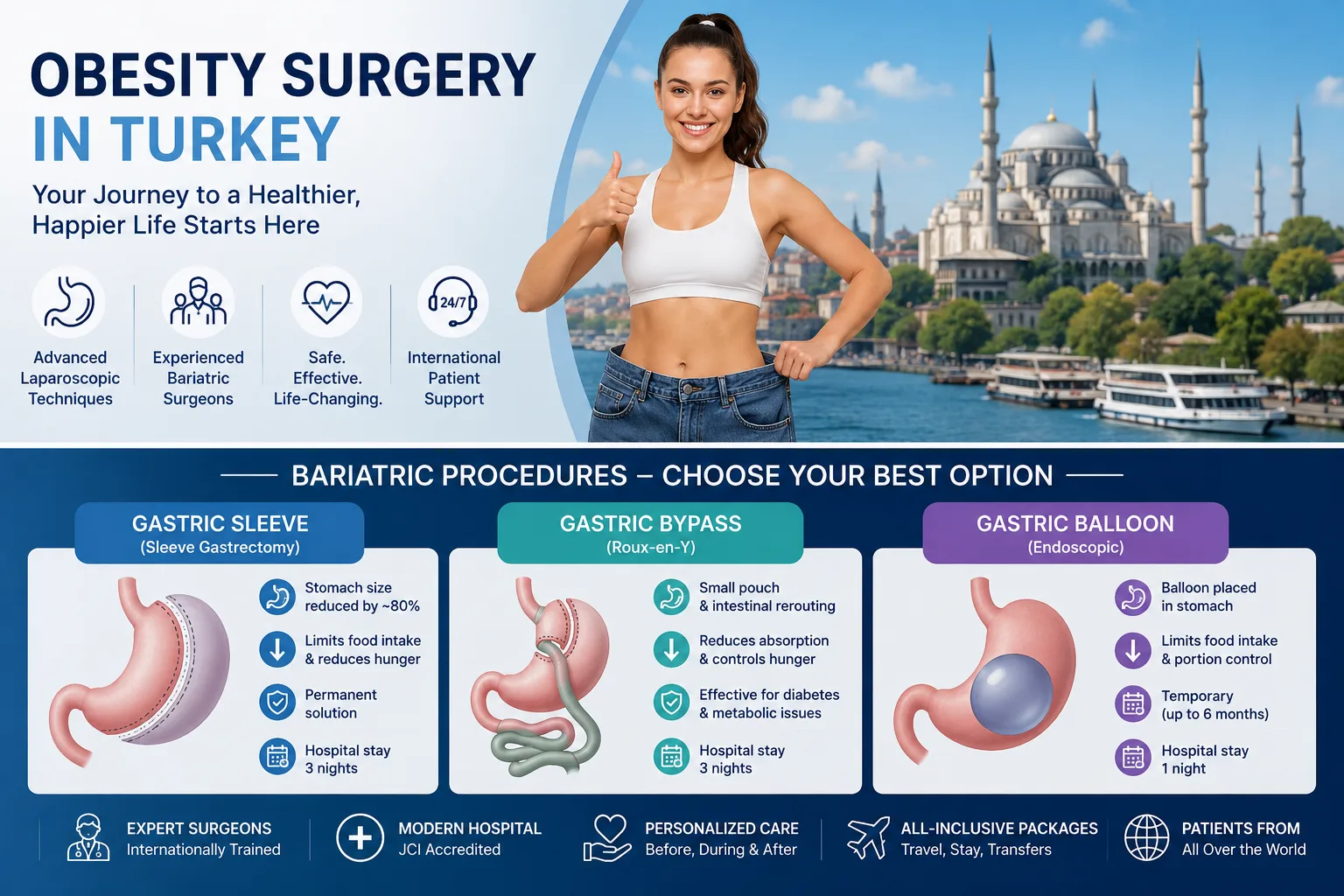
Bariatric Surgery and Gastric Balloon Options
Dr. Cinik Clinic offers three principal weight-loss procedures:
Gastric sleeve surgery, or sleeve gastrectomy
Roux-en-Y gastric bypass
Endoscopic gastric balloon placement
Gastric sleeve and gastric bypass are bariatric operations. A gastric balloon is a temporary endoscopic weight-loss device rather than a surgical procedure.
The most appropriate treatment is determined after an individual medical evaluation.
Gastric Sleeve Surgery
Gastric sleeve surgery, medically known as sleeve gastrectomy, is a laparoscopic bariatric procedure in which approximately 75% to 80% of the stomach is removed.
The remaining stomach forms a narrow, tube-shaped sleeve. This reduces stomach capacity and can affect hormones associated with hunger and fullness.
Unlike gastric bypass, sleeve gastrectomy does not reroute the intestines. However, it is permanent and cannot normally be reversed.
Gastric sleeve surgery may be considered for patients who:
Have clinically significant obesity
Have been unable to achieve lasting results with non-surgical treatment
Have obesity-related medical conditions
Prefer a procedure that does not reroute the small intestine
Understand the possibility of reflux and nutritional deficiencies
Are prepared to follow long-term nutritional guidance
Patients generally begin with a liquid diet after surgery before gradually progressing to puréed, soft, and solid foods.
Gastric Bypass Surgery
Gastric bypass surgery, or Roux-en-Y gastric bypass, creates a small stomach pouch and connects it to a lower section of the small intestine.
Food therefore bypasses most of the stomach and part of the upper intestine. This limits meal size, changes digestive hormones, and reduces the absorption of some calories and nutrients.
Gastric bypass may be considered for patients with severe obesity, significant metabolic disease, or certain cases of reflux. However, suitability depends on the patient’s complete medical profile.
Because the procedure changes nutrient absorption, patients require lifelong nutritional monitoring and vitamin or mineral supplementation.
Gastric bypass may be considered for patients who:
Have severe or complex obesity
Have type 2 diabetes or metabolic disease
Have not achieved lasting weight loss through non-surgical methods
Have reflux that may make sleeve gastrectomy less suitable
Are prepared for permanent dietary changes
Can commit to lifelong vitamin use and medical monitoring
The procedure is technically reversible in some circumstances, but reversal is complex and should not be considered an expected option.
Gastric Balloon
A gastric balloon is a temporary, non-surgical weight-loss treatment.
A soft balloon is inserted into the stomach through the mouth using an endoscope. It is then filled so that it occupies space within the stomach, helping the patient feel full after eating smaller portions.
There are no abdominal incisions, and the digestive system is not permanently altered. Depending on the balloon system used, the device remains in the stomach for a defined period before being removed or passing naturally.
At Dr. Cinik Clinic, the standard endoscopically placed gastric balloon is described as remaining in the stomach for approximately six months.
A gastric balloon may be considered for patients who:
Do not currently qualify for bariatric surgery
Prefer a temporary and non-surgical treatment
Require moderate weight loss
Need to lose weight before another medical procedure
Have previously struggled with diet-based weight loss
Are willing to participate in nutritional and behavioural support
A gastric balloon should be combined with a structured diet and lifestyle programme. It does not produce permanent results by itself.
Although it is less invasive than surgery, it is not risk-free. Possible complications include nausea, vomiting, abdominal pain, balloon deflation, balloon migration, obstruction, pancreatitis, ulcers, overinflation, and, rarely, serious or life-threatening complications.
Gastric Sleeve vs. Gastric Bypass vs. Gastric Balloon
Feature | Gastric Sleeve | Gastric Bypass | Gastric Balloon |
|---|---|---|---|
Procedure type | Bariatric surgery | Bariatric surgery | Endoscopic treatment |
Anaesthesia | General anaesthesia | General anaesthesia | Sedation or anaesthesia, depending on the device and patient |
Abdominal incisions | Small laparoscopic incisions | Small laparoscopic incisions | None |
Stomach changes | Approximately 75%–80% removed | Small pouch created | Temporary balloon placed inside the stomach |
Intestinal rerouting | No | Yes | No |
Permanence | Permanent | Intended to be permanent | Temporary |
Primary mechanism | Restriction and hormonal changes | Restriction, hormonal changes, and reduced absorption | Earlier fullness and portion control |
Nutritional supplements | Commonly required | Lifelong supplementation usually required | Determined by nutritional assessment |
Typical weight-loss potential | Substantial | Substantial and often greater in complex cases | More moderate and temporary |
Recovery | Several weeks | Several weeks | Usually shorter than surgery |
Best suited for | Patients requiring durable surgical weight loss | Patients with complex obesity or metabolic disease | Selected patients seeking a temporary non-surgical option |
Results vary considerably. No specific amount of weight loss can be guaranteed.
Who Is a Candidate for Bariatric Surgery?
Eligibility is determined through a full medical and multidisciplinary assessment rather than BMI alone.
Updated international guidance recommends metabolic and bariatric surgery for adults with a BMI of 35 or above, regardless of whether obesity-related conditions are already present. Surgery may also be considered for patients with a BMI between 30 and 34.9 who have metabolic disease or have not achieved substantial, lasting improvement through non-surgical treatment.
A suitable candidate may:
Have obesity that affects their physical or psychological health
Have type 2 diabetes, hypertension, sleep apnoea, joint disease, or another related condition
Have made previous supervised attempts to lose weight
Be medically fit for anaesthesia and surgery
Understand the benefits, limitations, and risks
Be willing to change eating and activity habits
Be able to attend long-term follow-up
Be prepared to take prescribed vitamins and minerals
Have realistic expectations
Age alone does not automatically determine eligibility. Younger and older patients require individual risk assessment, and specialist criteria apply to adolescents.
Who May Not Be Suitable for Bariatric Surgery?
Surgery may need to be delayed or may not be appropriate when a patient has:
An untreated eating disorder
Uncontrolled psychiatric illness
Active alcohol or substance dependency
A medical condition that makes anaesthesia unsafe
An inability to follow post-operative instructions
Uncontrolled nutritional deficiencies
An active infection
A current pregnancy
Unrealistic expectations
An unwillingness to attend long-term follow-up
Smoking and nicotine use increase the risk of poor healing, ulcers, respiratory complications, and other problems. Patients may be required to stop using nicotine before and after surgery.
Final eligibility can only be confirmed by the treating medical team.
Benefits of Bariatric Surgery
For appropriate patients, bariatric surgery may provide benefits beyond weight reduction.
Potential benefits include:
Significant and sustained weight loss
Improved blood-sugar control
Improvement or remission of type 2 diabetes
Lower blood pressure
Improved cholesterol levels
Reduced severity of obstructive sleep apnoea
Greater mobility
Reduced weight-related joint discomfort
Improved fertility in some patients
Better quality of life
Reduced need for some medications
Results depend on the procedure, starting weight, medical conditions, dietary adherence, physical activity, and long-term follow-up. Bariatric surgery can improve many health conditions associated with obesity, but it does not guarantee that every condition will completely resolve.
Why Consider Obesity Surgery in Turkey?
Turkey is a popular destination for international patients seeking bariatric treatment. Patients may consider treatment in Istanbul because of access to experienced medical teams, laparoscopic surgery, international patient coordination, and treatment packages that can include hospital care, accommodation, and local transfers.
Cost is an important consideration, but it should not be the only factor when choosing a bariatric provider.
Patients should also evaluate:
The surgeon’s qualifications and bariatric experience
The licence and standards of the treatment facility
The experience of the anaesthesia team
Emergency and intensive-care capabilities
Infection-control procedures
The quality of nutritional support
The availability of long-term follow-up
The arrangements for managing complications after returning home
The exact services included in the quoted price
The recommended timing of air travel after treatment
Patients should receive clear written information about the procedure, possible risks, aftercare arrangements, and what happens if additional treatment is needed.
Why Choose Dr. Cinik Clinic for Obesity Treatment?
Dr. Cinik Clinic provides coordinated obesity treatment for patients travelling to Istanbul.
Our published bariatric programme includes:
Remote medical assessment before travel
Individualised treatment planning
Laparoscopic gastric sleeve and gastric bypass surgery
Endoscopic gastric balloon placement
Pre-operative laboratory testing
Anaesthetic assessment
Psychological and nutritional evaluation
Hospital monitoring
Dietary guidance
International patient coordination
Post-operative instructions
Remote follow-up support
The hospital’s current information describes a total Istanbul programme of five nights for gastric sleeve and gastric bypass patients, including hospital and hotel accommodation. The precise schedule may change according to the patient’s health, treatment, recovery, and medical recommendations.
No patient should be discharged or advised to fly based only on a standard package timetable. Fitness to leave the hospital and travel must be confirmed individually by the treating team.
The Bariatric Treatment Journey at Dr. Cinik Clinic
1. Remote Medical Assessment
Before travelling, the patient provides information about:
Height, weight, and BMI
Existing medical conditions
Previous operations
Current medications
Allergies
Weight-loss history
Smoking and alcohol use
Previous bariatric treatment
Relevant laboratory results
The clinical team may request HbA1c, blood count, liver and kidney function, thyroid tests, vitamin levels, glucose tests, coagulation studies, or other investigations.
Dr. Cinik’s published programme currently requests HbA1c and C-peptide results before gastric sleeve and gastric bypass treatment. Additional testing may be required depending on the patient’s medical history.
2. Arrival in Istanbul
International patient coordinators assist with the planned arrival and admission process.
Accommodation, hospital admission, and transfers depend on the selected treatment package. Patients should confirm exactly what is included before travelling.
3. Pre-Operative Evaluation
Before surgery, the patient undergoes medical assessment. This may include:
Blood tests
Electrocardiogram
Chest imaging when indicated
Anaesthetic consultation
Surgical examination
Nutritional assessment
Psychological evaluation
Additional specialist consultation
Endoscopy or abdominal imaging when required
A planned procedure may be changed, delayed, or cancelled if testing identifies an unexpected safety concern.
4. Treatment Day
Gastric sleeve and gastric bypass surgery are performed laparoscopically under general anaesthesia.
During sleeve gastrectomy, most of the stomach is removed to create a narrow gastric sleeve.
During Roux-en-Y gastric bypass, the surgeon creates a small stomach pouch and reroutes part of the small intestine.
A standard gastric balloon is inserted through the mouth with an endoscope and placed inside the stomach without abdominal surgery.
5. Hospital Monitoring
After bariatric surgery, patients are monitored for bleeding, leakage, infection, blood clots, dehydration, nausea, pain, breathing problems, and other early complications.
Patients are generally encouraged to begin walking as soon as medically appropriate. Oral fluids are introduced gradually according to the surgical protocol.
The hospital stay depends on the procedure and the patient’s recovery. A longer stay may be required if there are medical concerns.
6. Discharge and Hotel Recovery
Patients are discharged only when the medical team considers them sufficiently stable.
Discharge criteria may include:
Stable vital signs
Adequate pain control
Ability to walk
Ability to tolerate the permitted fluids
No signs of a serious complication
Understanding of medications and dietary instructions
A safe accommodation and travel plan
The patient may then continue recovering at a hotel before returning home.
7. Return Home and Remote Follow-Up
Before travelling, patients should receive:
A discharge summary
A medication plan
Dietary instructions
Wound-care guidance
Vitamin and mineral recommendations
Emergency warning signs
Contact information for the clinical team
A follow-up schedule
Long-term bariatric follow-up should continue after the patient returns home. This may involve the Dr. Cinik team, a local primary-care doctor, a bariatric specialist, and a registered dietitian.
Diet After Bariatric Surgery
Dietary progression after gastric sleeve or gastric bypass is gradual. The exact programme is provided by the clinical dietitian.
Typical stages include:
Clear or full liquids
Puréed foods
Soft foods
Gradual introduction of suitable solid foods
Long-term balanced eating
Patients are generally advised to:
Eat slowly
Take small bites
Chew thoroughly
Stop eating when satisfied
Prioritise protein
Avoid high-sugar foods and drinks
Avoid carbonated beverages
Drink enough fluid between meals
Avoid drinking large amounts with meals
Take prescribed vitamins and minerals
Limit or avoid alcohol
Attend nutritional follow-up
Eating too quickly or consuming unsuitable foods may cause pain, nausea, vomiting, reflux, or dumping symptoms, particularly after gastric bypass.
Vitamins and Nutritional Monitoring
Nutritional deficiencies can develop after bariatric surgery, especially after gastric bypass.
Depending on the procedure and individual test results, patients may need:
A bariatric multivitamin
Iron
Vitamin B12
Folate
Calcium
Vitamin D
Thiamine
Other prescribed supplements
Blood tests must be performed at the intervals recommended by the treating team.
Failing to take supplements or attend monitoring can lead to anaemia, nerve damage, bone loss, muscle weakness, and other serious complications. Nutritional deficiencies, gallstones, strictures, and hernias are recognised possible long-term issues after weight-loss surgery.
Recovery After Obesity Surgery
Recovery differs between patients.
After laparoscopic gastric sleeve or gastric bypass surgery, patients may experience:
Abdominal discomfort
Tiredness
Nausea
Reduced appetite
Changes in bowel habits
Temporary difficulty consuming enough fluid
Soreness around the incisions
Many patients return to non-physical work within approximately two to four weeks, although some require longer. Heavy lifting and strenuous exercise must be avoided until the surgeon confirms that they are safe.
Recovery after gastric balloon placement is generally shorter, but nausea, cramping, reflux, and vomiting can be significant during the first few days.
Patients should not compare their recovery with another person’s experience. Return to work, exercise, driving, and air travel should be approved individually.
Risks of Bariatric Surgery
All surgery carries risk. Bariatric procedures should only be undertaken after a full discussion of the potential benefits and complications.
Possible early risks include:
Bleeding
Infection
Blood clots
Lung complications
Anaesthesia complications
Leakage from a staple or connection
Injury to nearby organs
Dehydration
Nausea and vomiting
Difficulty tolerating fluids
Need for another operation
Rarely, death
Possible later complications include:
Vitamin or mineral deficiencies
Anaemia
Gallstones
Reflux
Stomach ulcers
Strictures
Internal or abdominal-wall hernias
Bowel obstruction
Dumping syndrome
Low blood sugar
Excessive or inadequate weight loss
Weight regain
Changes in alcohol absorption
Need for revision surgery
Follow-up procedures, hospital admissions, or further operations may sometimes be required after bariatric surgery.
Patients must receive procedure-specific risk information before providing informed consent.
Warning Signs After Bariatric Surgery
Patients should seek urgent medical attention if they experience:
Severe or increasing abdominal pain
Persistent vomiting
Inability to drink
Shortness of breath
Chest pain
Rapid heart rate
Fever
Fainting or severe weakness
Heavy bleeding
Increasing redness or discharge from an incision
Swelling or pain in one leg
Black stools or vomiting blood
Sudden deterioration after initially feeling better
Patients who have returned home should tell local medical professionals that they recently underwent bariatric surgery abroad.
How Much Weight Can You Lose?
Weight loss depends on:
The selected procedure
Starting BMI and body composition
Eating behaviour
Physical activity
Hormonal and metabolic factors
Existing health conditions
Medication use
Psychological wellbeing
Attendance at follow-up appointments
Gastric sleeve and gastric bypass generally produce greater and more durable weight loss than a gastric balloon. Gastric bypass may produce greater average weight loss in some groups, but it also involves intestinal rerouting and a greater risk of nutritional deficiencies.
Weight loss is usually fastest during the first year after surgery and then slows. Some weight regain can occur over time.
Published averages cannot predict an individual patient’s result, and no ethical provider should promise an exact number of kilograms or a guaranteed final BMI.
Is Obesity Surgery Permanent?
Gastric sleeve and gastric bypass are intended as permanent procedures.
The stomach does not return to its original anatomy after sleeve gastrectomy. Gastric bypass can sometimes be revised or reversed for medical reasons, but this is complex and carries additional risk.
A gastric balloon is temporary. Its long-term effectiveness depends on whether the patient maintains the dietary, behavioural, and activity changes developed during treatment.
Even after successful surgery, weight regain remains possible. Long-term success requires continued medical and nutritional care.
Pregnancy After Bariatric Surgery
Fertility may improve after significant weight loss. Patients who could become pregnant should discuss contraception with their medical team.
Pregnancy is generally postponed during the period of rapid weight loss, often for approximately 12 to 18 months after bariatric surgery. The appropriate interval must be determined by the bariatric and obstetric teams.
Pregnancy after bariatric surgery also requires nutritional monitoring because vitamin and mineral deficiencies can affect both the patient and the developing baby.
Body-Contouring Surgery After Weight Loss
Significant weight loss may leave loose skin around the abdomen, arms, thighs, breasts, chest, or back.
After weight has stabilised, suitable patients may consider procedures such as:
Tummy tuck
Lower-body lift
Arm lift
Thigh lift
Breast lift
Male chest contouring
Upper-body lift
Body-contouring surgery is normally considered only after weight has remained stable and nutritional health has been assessed. Combining a gastric balloon removal with major plastic surgery is not automatically appropriate and requires a separate surgical risk assessment.
Frequently Asked Questions
Is bariatric surgery safe?
Bariatric surgery has established benefits, but it is major surgery and cannot be described as risk-free. Safety depends on patient selection, the procedure, the surgical and anaesthetic teams, the hospital, pre-operative preparation, and post-operative follow-up.
What is the safest bariatric procedure?
There is no single safest or best procedure for every patient. Gastric sleeve, gastric bypass, and gastric balloon treatment have different benefits, limitations, and risks. The decision must be personalised.
Is a gastric balloon a type of obesity surgery?
No. A gastric balloon is an endoscopic weight-loss treatment. It does not require abdominal incisions and does not permanently change the digestive anatomy.
How long must I stay in Istanbul?
Dr. Cinik Clinic’s published programme currently describes a five-night stay for gastric sleeve and gastric bypass treatment. Gastric balloon stays are shorter, but the exact schedule should be confirmed because it may depend on the selected device, package, and clinical protocol.
A patient may need to remain longer if recovery is slower than expected.
Can I fly home immediately after bariatric surgery?
Not necessarily. The medical team must assess recovery and determine when air travel is appropriate. Flying too soon after surgery may increase the difficulty of managing dehydration, blood clots, pain, or an unexpected complication.
Do I need follow-up after returning home?
Yes. Bariatric surgery requires long-term medical and nutritional follow-up. Remote support can be useful, but patients should also establish appropriate local care.
What tests are required before surgery?
Testing is individualised and may include blood count, HbA1c, glucose, liver and kidney function, thyroid tests, vitamin levels, coagulation tests, ECG, imaging, and other examinations. Dr. Cinik’s current programme requests HbA1c and C-peptide results before gastric sleeve and gastric bypass treatment.
Will I need a special diet?
Yes. Patients follow a staged diet after surgery, usually progressing from liquids to puréed, soft, and then suitable solid foods.
Will I need vitamins for life?
Lifelong supplementation is commonly required after gastric bypass and is also frequently prescribed after sleeve gastrectomy. Requirements depend on the procedure, diet, and blood-test results.
Can bariatric surgery cure diabetes?
Bariatric surgery can substantially improve blood-sugar control, and some patients enter remission. However, remission is not guaranteed, and diabetes may return. Patients must continue medical monitoring.
How soon can I exercise?
Walking is normally encouraged early. More strenuous activity and weight training must wait until the surgical team confirms that healing is sufficient.
Can I regain weight after surgery?
Yes. Weight regain can occur after any bariatric procedure. Long-term eating habits, physical activity, psychological support, medical conditions, and follow-up all affect the result.
When can I have plastic surgery after weight loss?
Body-contouring surgery is usually considered after weight has stabilised and the patient’s nutritional condition is suitable. This often takes at least 12 to 18 months after bariatric surgery, although timing is individual.
Conclusion
Obesity treatment can help suitable patients achieve significant weight loss and improve conditions associated with obesity. However, every treatment requires realistic expectations, careful patient selection, and a long-term commitment to healthier eating, physical activity, nutritional supplementation, and medical monitoring.
Gastric sleeve surgery reduces stomach size without rerouting the intestines. Gastric bypass creates a small stomach pouch and changes the intestinal route. A gastric balloon is a temporary, non-surgical treatment designed to support portion control and behavioural change.
The right option depends on the patient’s BMI, medical history, metabolic health, eating patterns, previous weight-loss attempts, and personal goals.
Anyone considering obesity surgery in Turkey should undergo a comprehensive assessment, understand the potential risks, and confirm the arrangements for follow-up care after returning home. At Dr. Cinik Clinic, each treatment plan is developed individually to support safe preparation, informed decision-making, and sustainable weight management.